You don’t need a capital campaign to be a resilience hub. You need what’s already in your building. A resilience hub is a community space that carries neighbors through disruption, and you may already be most of the way there.
A resilience hub does three things:
- Before a disruption, it’s a daily anchor: programs, meals, a warm or cool place. Those everyday connections are the infrastructure, and you can’t build them in a crisis.
- During, it’s a lifeline: power to charge a phone or medical device, information when cell towers are down, a door people know how to find.
- After, it’s a staging ground for supplies, information, and reconnecting a scattered community.
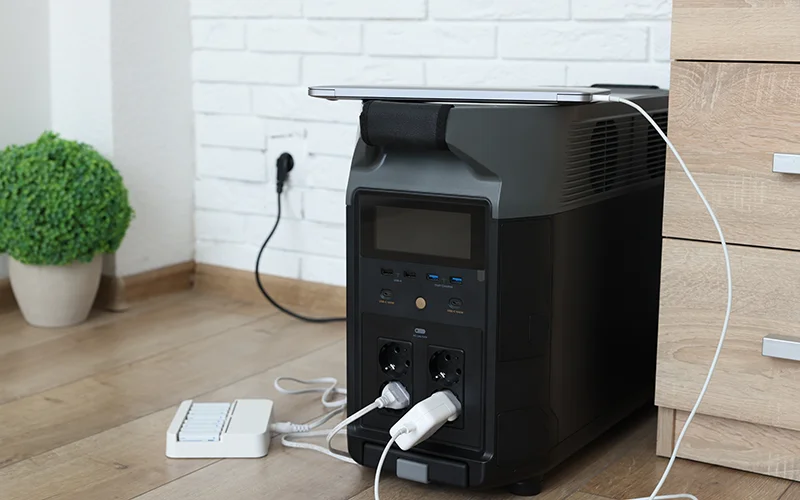
Most of that starts with what you have. If you have electricity, you can be a charging station: a few power stations keep phones, laptops, and CPAP machines running. If you have solar, add a battery, because grid-tied solar shuts off during a blackout, and the battery turns the sun you capture into backup power. If you have space, get designated as a cooling or warming center, often just an agreement and signage. If you have internet, add a backup hotspot, and when networks go down you’re where people reach family and find updates. If you have relationships, formalize them now: sign agreements with the Red Cross, health department, and mutual aid networks before anything happens.
No grant required to begin. Just a power station, a signed agreement, and a plan. The rest is what you’ve already built: a place your community calls its own. A resilience hub isn’t about generators. It’s about a community having somewhere to turn when everything else goes down, ready before it’s needed, not after. That’s the quiet promise of social purpose real estate.
Choose one action this week: order power stations, sign an agreement, or ask about a cooling-center designation. Then share with the network. We’d love to hear how your space is showing up for your neighbors, because when one of us figures something out, all of us get stronger.